Lamport General Systems
A first-person immersive sim born out of an independent study at the University of Pittsburgh. You play as a lone technician inside a derelict data center, manipulating hostile Byzantine fault-tolerant networks through message interception, code injection, and physical sabotage.
Awarded the Horror Studies Center 2025–2026 Student Scholarship through the University of Pittsburgh Honors College — $800 toward continued development, with a work-in-progress presentation at the HSC Student Showcase in May 2026.
Design Documents
The Design Problem
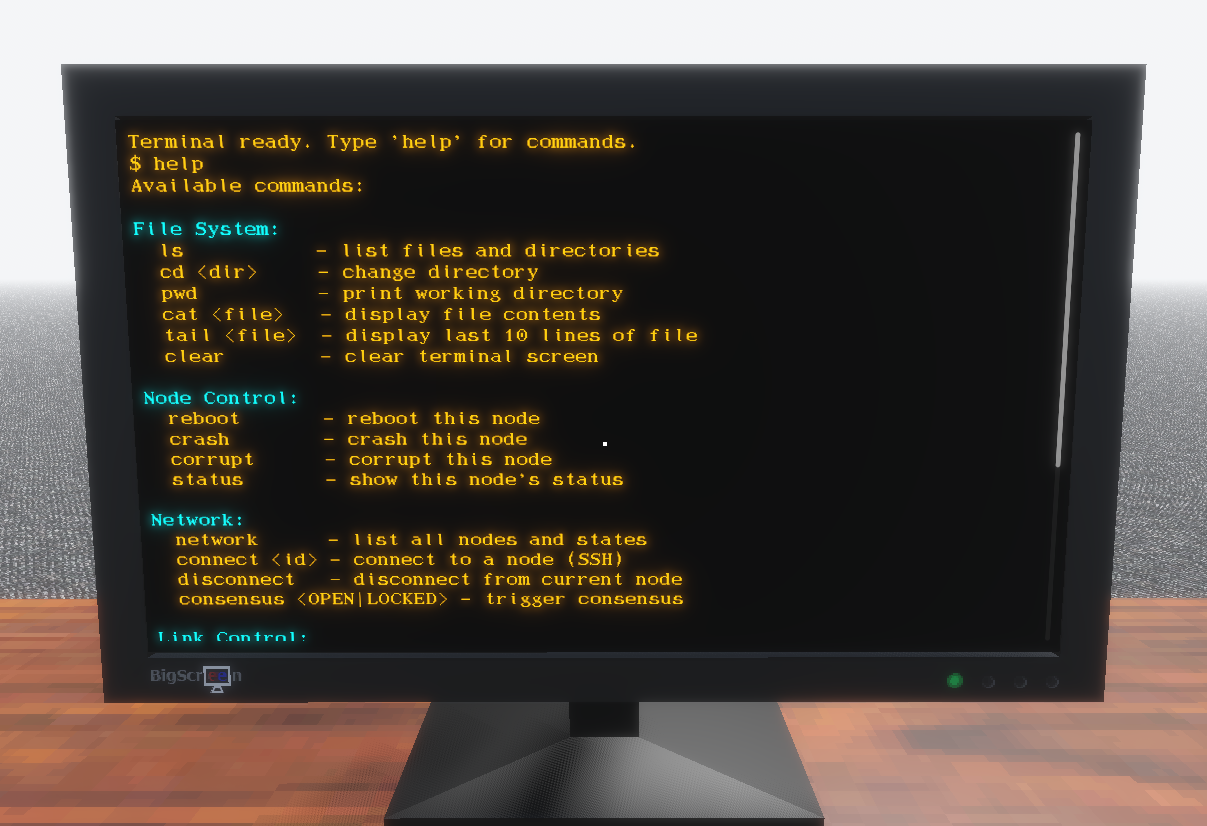
Adapting BFT for gameplay. Byzantine fault-tolerant protocols are deliberately resilient and opaque — resistant to exactly the kind of interference a player needs to exert. I designed a custom protocol tuned for interactive scenarios, preserving technical authenticity while keeping the systems legible and meaningfully vulnerable to player action.
Systemic depth vs. comprehension. The systems needed to reward mastery without requiring a background in distributed systems to engage with. This meant careful abstraction — enough emergent complexity for interesting play, without impenetrable technical detail in the way.
Emergent world-building. Rather than front-loading lore, the setting and narrative grew out of questions the gameplay raised. The authoritarian surveillance state is the natural consequence of asking "who would actually run a Byzantine fault-tolerant network, and why?"
Current Development
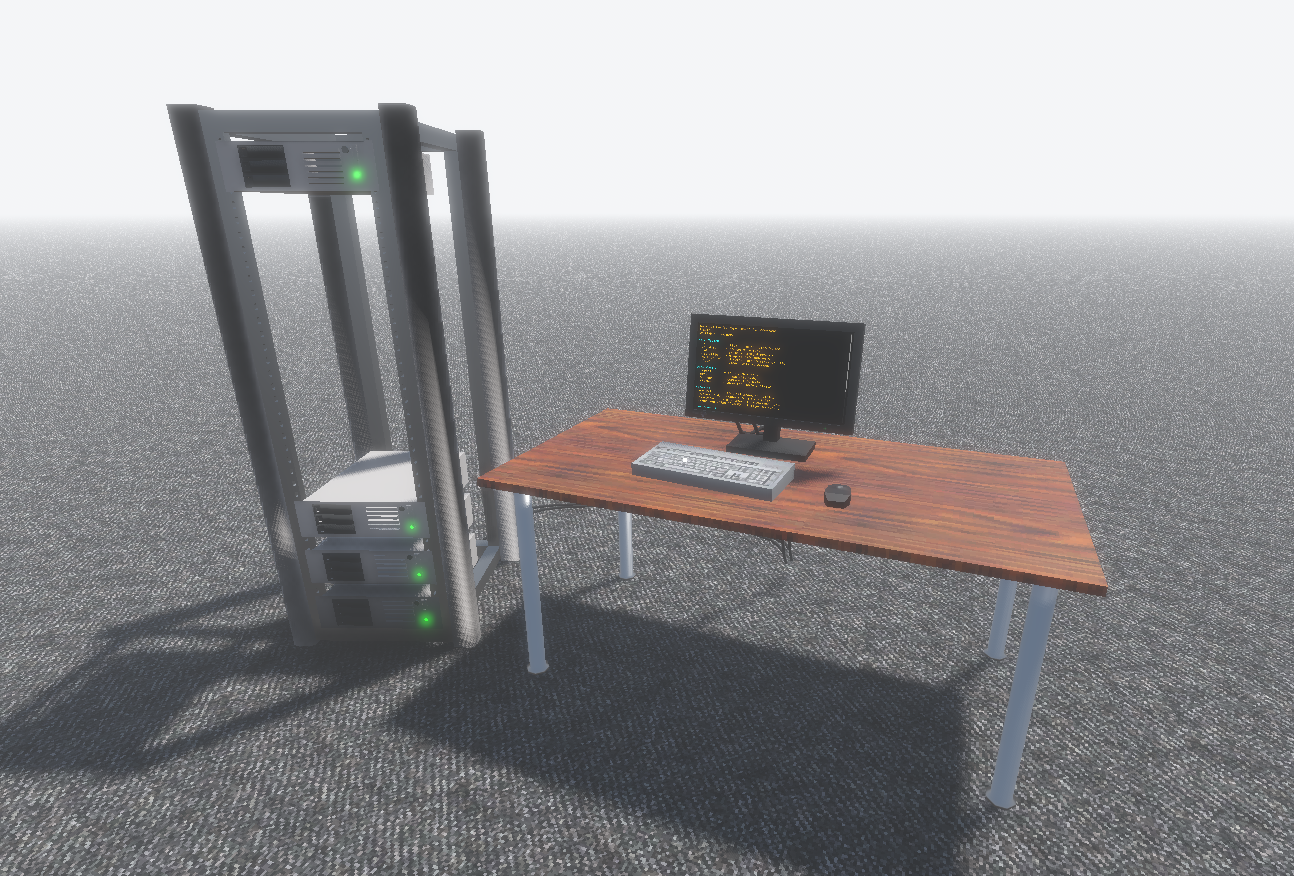
The foundation is built: player controller, PDA device, item viewing, arrival cutscene, and the main corridor are all complete. Work is now focused on the first real subnetwork — its gameplay loop and level environment — along with a scene loader for seamless transitions between areas of the facility. The humanoid robot AI system is next.